Showing posts with label outsider art. Show all posts

Wednesday, July 22, 2026

The Highwayman Returns: "John Fetterman's Greatest Hits I & II"/"Chain Reaction"


<"John Fetterman's Greatest Hits, Part I"/The Highwayman>


<"Chain Reaction"/The Highwayman">


<"John Fetterman's Greatest Hits, Part II"/The Highwayman>


Ah, yes, John Fetterman. How fitting, in light of the recent polling news about him (see "Greatest Hits, Part II"), that our friend, The Highwayman, returns with this cartoon -- one that feels especially pertinent, given the peculiar position that Fetterman occupies. Call it Vichy Chic, if you like -- the sort of personality who often prompts the bemused response: "Well, if he can call himself a Democrat, than anybody can."

What do we mean? Well, Fetterman is someone who espouses the type of contrarianism that's often at odds with the base, whether it's his unblinking support for Israel, enthusiasm for fracking, or unwillingness to acknowledge the popular anger against the overclass that's ignited demand for progressive ideas -- to an extent that seemed unthinkable in 2016, for instance, when Bernie Sanders ran for President.

And that's what makes Fetterman such a worthy target for satire -- he's simply the latest in a long line of reactionary Democrats, from the late Scoop Jackson, to Bob Kerry, Joe Lieberman, Joe Manchin, Kyrsten Sinema, who delight in breaking our train sets, and pissing on our parade (so to speak), especially on tight votes.

Simply stated, when they're railing against progressive ideals, voting against basic measures that would help people (e.g., raising the minimum wage), or preventing big ideas from advancing (such as Medicare For All), they're screwing up the nation. Whether they mean it or not is beside the point -- they're preventing the rest of us, the masses they threw under the bus long ago, from even trying to catch up, as we choke on the exhaust fumes.

I know what you're going to say next -- "But it's only a metaphor." True enough, but when you ask, "Why do you hate the Fettermans of the world so much?", that's how I sum it up. We all need a certain emotional shorthand to navigate these situations, and that's mine. At least, when it comes to summarizing a creep like him.

So, when this latest cartoon from the Highwayman slid over the transom, my first thought was, "So you're leaving us now, eh, Genocide John? Good riddance to bad rubbish, and all that, don't let the door hit you, blah-blah-blah..." One less person to soil the sandbox, or the brand, right? And I don't see how that's such a bad thing. So there you go, then. --The Reckoner

Friday, October 31, 2025

A Treat For Joe Meek Fans: Return To 304 Holloway Road (1992)

<"No, mate, we didn't get free sandwiches in those days..." 
Drummer Clem Cattini (left),who played on "Telstar," 
shares a light moment with Meek biographer John Repsch.
 
The woman behind them seems unsure 
what she's doing in this company...
("Just who are these nutters, exactly?")

"Return To Holloway Road" (YouTube capture)>

<i.>
What hasn't already been said about Joe Meek (1929-67), and the legend of his home studio at 304 Holloway Road? For casual fans, he's simply "The Telstar Man," who created, produced and recorded the Tornadoes' monster #1 US/UK chart-topper of 1962, which inspired the Con O'Neil-fronted biopic (Telstar, 2008).

Yet even in abbreviated form, his resume is impressive, going strictly on the string of big hits that he helmed there, from "Johnny Remember Me," by John Leyton (#1 UK, 1961), and its equally inspired follow-up, "Wild Wind" (#2 UK), to  "Just Like Eddie" (Heinz, #5 UK, 1963), "Globetrotter" (The Tornados, #5 UK, 1963), and his last major blockbuster, "Have I The Right" (The Honeycombs, #1 Australia, Canada, UK, Sweden; #5 US; #2 Holland, 1964).

Mind you, those are only the greatest hits. We're not even counting the quirkier fare that didn't chart, like David John & The Mood's three classic singles, or The Syndicats' "Crawdaddy Simone," which made no impression on its 1965 release, but has since gained its rightful recognition as a greasy, gritty slab of tough-minded R&B-driven rock (a status confirmed by its position as the closing number over the credits in Telstar). 

In fact, it's no exaggeration to view Joe Meek as a one-man game changer, starting with his status as Britain's first major independent producer. Try and imagine the British Invasion happening, for instance, without the transatlantic success of "Telstar" to kick-start it (coming a full year before the Beatles took the nation by storm). Reams of print have been devoted to Meek's production techniques, from his liberal use of compression, echo, and phasing, incorporation of found sounds, and old school workarounds (like speeding up recordings, to make up for his vocally-challenged artists' shortcomings).

And, while his methods are justly celebrated, let's not forget how far ahead of his time he reached as a songwriter, too. One of the more notable examples is "Do You Come Here Often?", an organ-driven, largely instrumental wink-wink, nudge-nudge nod to Meek's own repressed homosexuality -- still an official no-no, when he allegedly shot his landlady, and then committed suicide, on February 3, 1967 -- and is generally considered the first overtly gay pop record.

I could go on and on, but don't want to lose us in the weeds, so why not check out the first time we celebrated the essence of Joe's genius, and one of his major proteges, Screaming Lord Sutch, right at this link -- you'll get the idea quickly enough:


<Left to right: Honey Lantree (The Honeycombs), John Repsch, Roger LaVern and Clem Cattini (The Tornados)revisit 
the finer points of recording in the Beat Boom era,
in this scene from "Return To 304...">

<ii.>
Needless to say, I didn't know any of these things when I bought John Repsch's groundbreaking biography, The Legendary Joe Meek: The Telstar Man, in 1989. If I recall correctly, I did so on the strength of reviews in Time Out, or some music-/hipster-oriented rag along those lines. I'm fairly sure that the cartoonishly sensational cover -- a closeup shot of Joe, surrounded by the Grim Reaper and a bevy of 45s, circling him like so many UFOs -- helped to seal the deal. It certainly stood out a mile on the book rack at Tower Records' Piccadilly Circus outlet.

So imagine my surprise at finding this half hour film, "Return To 304 Holloway Road," on YouTube! It's an amazing document, essentially a celebration of the space that served as Joe's creative home, featuring many of the principals who recorded there -- as you'll see in these screenshots accompanying this post. The heavier hitters present include Tornados drummer Clem Cattini, and keyboardist Roger LaVern; Honeycombs drummer-vocalist Honey Lantree, and rhythm guitarist Martin Murray; and His Lordship himself, David (Screaming Lord) Sutch.

You also see members of lesser-rung bands like The Moontrekkers, and the Puppets, plus others whose recognition came long, long after the fact. Notable examples of the latter phenomenon include Danny Rivers, since documented on Cherry Red's Tea Chest Tapes reissue series, and the late Kim Roberts, who recorded a dozen unreleased tracks -- of which two graced Joe Meek's Girls (1997), a CD dedicated to some of the notable female artists he recorded.

Yet "Return To 304 Holloway Road" is a film without a backstory, it seems, judging from my online attempts to pin one down. It doesn't feature on the Internet Movie Database (IMDB), where the strangest, most obscure movies march happily on -- such as the one I saw last night, Encounter With The Unknown (1972), a B-grade horror anthology narrated by Rod Serling. Nor did I find any online references to it, however fleeting, a real oddity in a virtual era where exhaustive documentation is now the norm.

The one area of inquiry seemed most fruitful -- searching the respective company and director/producer, SPA Films Limited and Bob Frost, credited with the film -- also comes up short, beyond a listing on Companies House, the corporate UK tracking site. I did find a blog obituary, penned by a colleague on Frost's passing in 2016, that makes no mention of "Return To 304." (In any event, we know the date, which rolls out onscreen, right at the beginning, for reasons that will become apparent shortly.)

Searches for further information on SPA Films Ltd. yielded little, beyond basic details posted on Companies House, the UK's corporate tracking website. I found that SPA Films Ltd. got up and running on 10/2/90. Prior to that time, a different company, River Bounty Ltd. -- credited with post-production -- had been operating since December 1990. SPA Films itself dissolved in October 2020, four years after its founder's passing, which seems like a decent run, all things considered.


<"Not just now!" Honey Lantree 
and Martin Murray remember 
that moment on the stairs...>

<iii.>
Whatever you want to say about "Return To 304," it's definitely not a slick affair. How else to explain the filmmakers' curious decision not to start on the interviews or storytelling until we roughly reach the 12- or 13-minute mark? Until then, we're treated to the sounds of the guests milling around, in various configurations, gabbling like ducks at a pond (which isn't a criticism, or a putdown, just a realistic take on what we're seeing there).

I'm guessing that the filmmakers included these moments in the spirit of cinema verite, but for viewers, it's a deadly choice. Far better to skip over to that near-halfway point, and see what kinds of stories emerge, once Repsch finally gets down to business with his guests. But once he does, the results are fairly insightful, and rewarding to hear, from the parties involved.

Clem Cattini -- remarkably, still with us, at 88 -- comments about the casual nature of Joe's setup, which certainly came across as an radical one for musicians used to the acoustically soundproofed walls and tiled ceilings that prevailed in more formal studio settings. Workarounds were the norm, since the outside world itself interfered more often than not, Cattini recalls: "We had to stop recording, to let lorries go past."

As Cattini notes, landlady Violet Shenton insisted on having the music stop by 10:00 p.m., and she was never shy about telling Joe if she felt that the proceedings were getting too loud for comfort. His disclosure prompts Repsch to ask, "He didn't ever say, 'Look, Clem, can you drum quietly?'" Cattini smiles, zinger at the ready: "They knew that would be impossible."

Such comments only hint of Joe's reputation as a moody, unpredictable taskmaster, though some express this view more bluntly than others -- such as Roger LaVern, credited with additional keyboards on "Telstar".  "I remember so many problems with Joe," he chuckles, with a wicked smile.

It's an observation that draws a hearty round of laughter from the gathering, which becomes a pivotal midpoint for the film, as Murray recounts -- when Joe drafted him and his fellow Honeycombs to lay down the insistent foot stomping beat that plays such a prominent role in their signature hit, "Have I The Right."

Getting that task done meant lining them everyone up on the stairs, and having them pound mightily together, over and over, until Joe finally felt satisfied -- a process that wound on throughout the night, and into the wee hours, when the cleaning woman arrived, at 6:00 a.m.

Now came the hard part, as Murray elaborates: "She was very anxious to sweep the stairs." He pauses, and delivers the punchline. "I think she thought the stairs were falling in, because she was underneath them: 'Joe! I'd like to do the stairs!' And he got really angry, and said, 'Not just now!' Anyway, she didn't say too much. She might have sworn under her breath..."

"Was he pleased with the end product?" Repsch inquires.

"Oh, thrilled," Murray responds. "Absolutely thrilled."

"Yeah, he would be," Honey nods, looking -- well, absolutely fabulous, positively smashing, or insert whatever phrase works for you here -- in her royal blue pant suit and blazer. 

But then, again, five million worldwide sales of a hit single will do that, right? "Have I The Right" had legs, as they say in "da biz," to the point of inspiring a German-language cover ("Hab Ich Das Recht") for the Deutsch teenbeat market. The Honeycombs soon found themselves packed off on an early template for those never-ending world tours that accompany some unexpected success or other (which is how they became the first pop group to play Thailand, for instance, as Repsch's bio details).

It's not hard to imagine Joe bopping his head whenever "Have I The Right" boomed out from his radio, or the jukebox at the pub, losing himself in daydream after daydream: Yeah, see, that's how it's done, you bastards! I showed you with "Telstar," I'm showing you again with "Have I The Right," and I'll keep on showing you...once I get the next "Telstar" down, that is!

But that unexpected tonic of major success marked the last time that Joe would ever experience such a phenomenon, for a sustained period. Three years later, his own bright, shining star of success that he never stopped pursuing so avidly, would come crashing down to Earth, in a welter of tragedy, one that left numerous unanswered questions. But that's another story, for another time.


<Above: Lord Sutch palms off one of his infamous "Loony Money" notes on Clem Cattini, who's fully in on the joke.

<Below: Honey Lantree and Martin Murray look on with amusement, as Lord Sutch prepares to lead the visitors on a singalong for his birthday.>


<iv.>
The film takes yet another left turn around the 20-minute mark, as Screaming Lord Sutch -- or David Sutch, perhaps, to his inner circle -- chugs boisterously up the stairs, eager to do his part in promoting the Meek legacy as someone who recorded several notable singles with him between 1961 and 1965.

The best-known is "Jack The Ripper" (1963), which naturally prompts Sutch to lead a bawdy singalong of lyrics that likely wouldn't pass muster in today's climate: "
"Well, he walks down the street/Every girl he meets, he asks, "Is your name Mary Kelly?'"

Sutch and Meek both shared a well-documented love of horror and sci-fi, which makes itself felt in some of their other singles, like "Till The Following Night" (1961), "Monster In Black Tights" (1963), and "Dracula's Daughter."

I remember playing some of these songs for a support group, whom I'd persuaded to do a presentation about these two particular gents. 
I went in, thinking, "Ah, these records will sound pretty tame to their ears, won't they? I bet they don't even tap their feet!"

To my great surprise, and enduring amusement, I saw a few people shrink back in their chairs! 
One person, if I recall correctly, practically jumped out of their seat after I pulled out the Moontrekkers' moody 1961 instrumental, "Night Of The Vampire" -- which opens with a full minute of howls, shrieks, and moans, amid a sonic backdrop of gusty winds, before the song actually kicks in. (Joe apparently is among those shrieking their lungs out; go figure, eh?)

Not surprisingly, perhaps, the BBC promptly banned the single as "unsuitable for persons of a nervous disposition," though not before it had climbed to #50 on the UK charts. When I asked for comments about the music, it didn't take long for a consensus to form: "Definitely someone who's obsessed with the dark side!" (At this point, perhaps, you may feel fully entitled to ask, "Well, what did you expect?")

His grand entrance made, all eyes rapidly shift to Sutch in full-on promo mode, as he shamelessly plugs his latest effort, The Screaming Lord Sutch Story (EMI), which prompts him to drop a sardonic observation: "I don't give 'em away, any records out, 'cause I'm still trying to get some royalties!"

It's an understandable comment from a man whose status owed much to his knack for endless, yet inventive self-promotion, and his over the top live act -- necessities for an artist who never achieved major success, even as he hired numerous musicians who later became famous in their own right. (Legendary guitarists Jimmy Page and Ritchie Blackmore are just two examples of this phenomenon.)

It's the reason, perhaps, when Murray innocently asks Sutch what he's been up to lately, His Lordship replies a tad defensively: "Some us still do gigs!"  
That unerring combination of self-promotion and self-deprecation also lent itself well to Sutch's satirical political forays -- including 39 campaigns for Parliament, between 1963 and 1997 -- most commonly as the face of the Official Monster Raving Loony Party (which he co-founded, and still exists). 

As part of the satire, Sutch produced his own brand of "Loony Notes" (signed by the "Chief Shyster"). Naturally, he doesn't miss the opportunity to palm one off on Cattini, his vastly more successful peer (who holds a world of playing on at least 44 #1 hits, the most of any session musician). 

"This is worth more than Joe's royalties!" Cattini cracks, which prompts an equally gentle jab from Sutch: "Don't spend it all at once."

Amid all the good-natured tomfoolery, Sutch announces that it's his birthday, which provides the cue for Murray to lead an appropriately rowdy singalong of the old standard. A cake is duly wheeled out, with a black coffin as the centerpiece -- which prompts a slight face from Murray: "Just a nice thing to put on the table, isn't it? A coffin..."

Though served up to burnish Sutch's horror rock image, that coffin offers a poignant and unsettling sight, in light of his own suicide, seven years later. As Sutch's biographer has observed: who cheers up the man who sees his job as cheering everybody else up?

Of course, Lord Sutch wasn't the only musician in Meek's orbit to die prematurely. Kim Roberts, seen briefly here and there, also passed away, of heart problems, at age 55. Cattini's example aside, many of the participants here are long gone, though Sutch's birthday announcement provides an important clue -- in terms of sussing out one major reason for filming "Return To 304."

A quick search discerns the date of Sutch's birthday as November 10, when His Lordship turned 51; reason enough, it seems, for rounding up the principals featured here, and celebrate him, at the same time as Joe Meek. 
I also suspect that John Repsch played a major part in this project, since he's the one we see working the room, chatting up this person here, firing off a question or two at somebody else over there. In other words, he not only lent his face to this film, but probably had a hand in its creation behind the scenes, as well.

After all, it's touted as a VHS issue on YouTube, which suggests either a local or regional release, even if it didn't hit UK cinemas nationwide. Put another way, I doubt the producers would have devoted nearly half the contents to the social aspect of the night, if they didn't think that someone might sit through it all. In any event, further details behind "Return To 304"'s creation and release would be most welcome.


<A couple of young fans treat the filmmakers
to a chorus or two of "Have I The Right,"
in the bathroom, which also doubled
as Joe's echo chamber...>


>Coda<
Fittingly, "Return To 304" closes with an excerpt from "Telstar," the song that launched Joe Meek -- and indeed, so many of the musicians that he drew into his orbit -- for that brief, yet exhilarating rocket ride to the proverbial "toppermost of the poppermost," to coin a phrase from his Merseybeat rivals, the Beatles. 

Because, in the end, "Return To 304 Holloway Road" reminds us that Joe Meek was much a metaphor, as a flesh and blood person -- as someone dedicated to breaking the sound barrier, figuratively and literally, in every sense of the term. Watching Telstar, amid its one glaring factual error -- Joe Meek and Heinz did not sleep with one another -- makes me think, "If only someone had gotten to this guy faster, made feel better in his own skin, reassure him that others really did love him, and that his future would turn out, in the end, how much more music would we have gotten?"

Because, in a sense, that is what happened. Shortly after Joe's suicide, a higher court freed up a mountain of "Telstar" royalties that had been frozen by a plagiarism suit, which also got dismissed. Cherry Red Records is busily reissuing the cream of the so-called "Tea Chest Tapes," some 600 trunks of reel to reel spools from Joe's many, many sessions, ensuring that new discoveries about his methods will continue for years to come.

Bands continue to cover "Telstar," and other notable Meek-related songs, while others reference some aspects of his production that strike their fancy. How appropriate, for instance, that Muse frontman Matt Bellamy happens to be the son of George Bellamy, who played rhythm guitar on "Telstar" -- proof positive, for those needing it, that the apple doesn't fall far from the tree.

The homosexuality that Meek spent so much time repressing became legal for Britons in July 1967, only five months after his death -- news that might finally have healed the various fissures tearing and grinding at his psyche, which caused him to self-medicate it via a vicious cycle of uppers and downers.

As Repsch notes, people buy the most trivial of records associated with Joe Meek, simply because he produced them. In 60 years, he's gone from someone who died broke and embittered, whose name has never been pervasive than today. What a shame he didn't live to see any of it, and yet, what a remarkable outcome it is, to see so many people still finding something worth celebrating as a synonym for sonic exploration.

And that's the chief appeal of this quirky little piece of film, however obscure it may be. And oh, yes, while we're about it? Happy Halloween. --The Reckoner

Links To Go (Hurry, Hurry, Take
The Last Train To Meeksville):
Islington Tribune: The Life And Violent Death

Journal On The Art Of Record Production:

Queer Heritage: "Do You Come Here Often?":
https://www.queermusicheritage.com/mar2015meek.html


 Return To Holloway Road:
https://www.youtube.com/watch?v=XuhiD1VDPQU


<Above: From the film: 304, as it appeared 
to the outside world, in 1990s-era London

Below: 304, as it is today:
If only these walls could talk...
A plaque now marks the site.>


Saturday, September 28, 2024

Bitchy Bitch Vs. Donald Trump (Two New Roberta Gregory Cartoons)


<By Roberta Gregory>

"Seriously, I am trying to avoid political stuff lately, and post more uplifting content, but there is too much cra-zeeee…. I drew this on Tuesday for the DUNE event, in Seattle, and was happy to just post on their feed, but I gotta share. This is all getting so surreal…. And scary."

<By Roberta Gregory>

"And here’s a scribble I followed up with.
Drawn at my La Conner Art Circle group."

Roberta Gregory's artwork, especially her groundbreaking Naughty Bits comics -- which ran from 1991 to 2004, over 40 issues -- have long been a favorite around here. The Fantagraphics series starred "Bitchy Bitch" Midge McCracken, a fortyish, unmarried working woman "whose behavior is seldom sweet or generous, and one gets a strong impression menopause won't even put a dent in her permanent state of PMS," claims the now-defunct toonpedia.com site:

"
When she gets angry, which is often, she undergoes what looks like a physical transformation. Her snarling lips and gritting teeth sprawl beyond the boundaries of her face, and the curves of her body — what few there are — become hard and sharp. 

"From this lump of rather one-note clay, Gregory has fashioned a three-dimensional character, sympathetic enough to have held the attention of readers for more than a decade."

One-note clay? Ehh, speak for yourself, mate, and let those perky Dave Matthews tunes wash over your frontal lobes, 'cos watercooler poets and barroom philosophers are a dime a dozen! (As the author confirms, incidentally, in his closing sentence: "
Apparently, her simple message — that there are things in this world that are worth getting really, really steamed about — strikes a responsive chord wherever humans are human."

All I can say is, when
the Squawker introduced me to Bitchy's world, I was hooked, and I never looked back! It's the same feeling I experienced when I first heard The Clash, stumbled across Roque Dalton's poetry, or saw The Battle of Chile. That sort of manic thrill doesn't wash over you often, but once it does, you know it. And you never forget.

So it went with Bitchy, and Gregory's later work, such as her Artistic Licentiousness series. However, sightings of Bitchy haven't been as common in recent years, so when Chairman Ralph, our ever-alert man on the ground, tipped us off about these Gregory 'toons on Facebook, we had to see if we could share them here! So Ralph asked, got the OK, and here they are, with comments from the artist.

As you can see, there's a tense dynamic going on here, between Bitchy, and a certain rogue orange ex-President. We'll say no more, get out of the way, and let you enjoy the proceedings. Does this signal a Bitchy revival? Time will tell, but I leave you with one last thought, from one of my favorite blogs (see link below):

"Art, after all, often requires and encourages critical thinking, introspection and empathy-- traits anathema to authoritarian regimes, which thrive on conformity, suppression of dissent and rigid control over thought. Artists, musicians, and writers frequently challenge dominant narratives and question the status quo, fostering environments where free thought is valued over dogma. Music, literature and art have long served as outlets for political dissent." The cartoons appear here, by courtesy of the artist. For more information, see below. Thanks, Roberta!--The Reckoner Links To Go

Sunday, December 31, 2023

The Punk Rock Alphabet: (Take V) Our Three Biggest Asks For 2024

We Didn't See These Things
Under Our Tree In 2023:


But Hope Springs Eternal,
And Still...We Want More:


Here Is ALL We're
Asking For, In 2024:


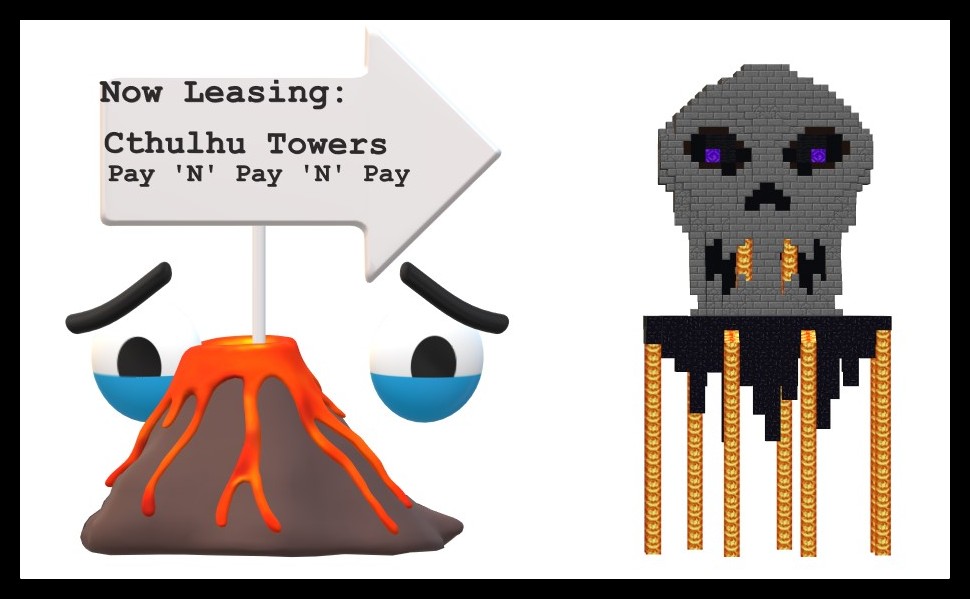
<"Now Renting..."/The Reckoner>
 

<Decent (Affordable) Housing,
That Doesn't Force Us To:>
                    A)  Empty Our Wallets 
         W/Rampant Abandon.

         B) Flee Our Abodes Every Five Years,
         Because The Speculators
         Wanna Jack Up The Dow Jones.

         C) Give Up Our Firstborn
         (Not To Mention Those
          Who Have Yet To Be Born).


<"Don't Miss This One..."/The Reckoner>


<Enough Of Rampant Greedflation
That Forces Us To...>
      A) Crack Open Every Last Piggbyank
        That's Still Hidden Under The Bed.

            B) Dry Up Our Bank Accounts
        ("What Accounts?", We Ask).

        C) Eat Ramen Noodles, 3X A Day,
        For Breakfast, Lunch & Dinner.

        Because We Have To Feed
        The Property Barons First (Remember)?


"Just Another Number..."/The Reckoner>

<Fire All Those Fake Insurers
That Force Us To...>
                             A) Cancel Every Last Subscription
             To Whatever Resurrections

             May Still Beckon.

            B) Delay That Bucket List Item
            We've Been Contemplating
            For The Umpteenth Time.

            C) Extinguish Whatever Hopes
            We May Still Entertain
            For An End To The Status Quo
            That Dogs Our Daydreams.


<"It's About Time..."/The Reckoner>

<Get Ready For A Reckoning,
& Avoid Running Into
Those Same Old, Same Old
Unforced Errors...>

    A)Because...Maturity Shouldn't Mean...
    Rehashing The Mistakes Of The Past*.

     B) Because...We're Sick 'n' Tired...
     Of The Same Old Broken Record,
     Playing Over & Over & Over, In Our Heads.

     C) Because...We're Weary Of Hearing...
     Why We Still Have To Wait...
     For What The Austeritycrats 
     Say...We Still Can't Have.


And Remember: 
Talk - Action = Zero (DOA)

<Here's Looking At 2024:>
The Reckoner & The Squawker


(*Thanks to Jello Biafra, for making this observation on all our behalf!)

Sunday, October 23, 2022

Hinckley Has A Vision (So Should We Listen?)


<Wayne's World Was Never Like This:
Doc Dart and friends dish out 
pure cable access chaos, 1982: 
YouTube.com>

I can't believe they're serious
Superstitious spastic fools
They live for everlasting life,
And ruin my life here on Earth

They must be so intelligent
To know so much more than me...

Hinkley had a vision,
   Hinkley had a vision...

<"Hinkley Had A Vision," The Crucifucks>


<Doc Dart works the crowd (Steve Shelley, rear),
The Dale, Akron, OH, 1982:
YouTube.com>


<i.>

If you spent any time in East Lansing music circles in the early or mid-'80s, you may have heard  this song, at some point. If not, you probably heard of the band (The Crucifucks), or its perpetually wired 'n' weird frontman, Doc Dart, the man behind those provocative lyrics.

The name practically guaranteed struggles in booking gigs, and creative billing workarounds on flyers (such as "Christmas Folks"). Airplay on college radio stations -- the most receptive outlets for music that didn't suit mainstream tastes -- was also often out of  the question. Nowadays, if you hear their name invoked, it's some sort of punk historiy name-check (typicaly, as the pre-Sonic Youth entry on drummer Steve Shelley's resume).

I remember that era well. For diehard
 fans, Doc Dart came across like a punked-out Jim Morrison -- constantly duking it out with cops, promoters, and other dodgy authority figures, when he wasn't getting busted for petty offenses, and pushing the envelope of whatever the Greater Lansing gatekeepers deemed as the acceptable face of its music scene (mainly, crappy cover bands, whose career highlights amounted to: "I supported so-and-so when they came to town").

"Hinkley Had A Vision," from the band's 1985 self-titled debut album, typifies Doc's fiercely confrontational stance -- screw Christianity, screw the government, screw the military, screw those slam pit party crashers -- driven along by his nails-on-a-chalkboard vocal style.

The song equates the delusions of winning actress Jodie Foster's love -- which Hinckley cited as his motive to shoot Reagan, and three others -- with the fallacies of organized religion, as Doc sees them ("Aw, teach me how to pray, good Christian/If it works, you'll all be dead"). One man's craziness is another man's vision, and vice versa, Doc suggests. And we don't always get to pick and choose whose vision makes better sense. 

Curiously, the song misspells Hinckley's name, but no matter; we all know who's referenced here. Such is the power that notoriety confers on those who seek it. 


<John Hinckley's FBI mugshot>

<ii.>
By the time "Hinkley Had A Vision" came out, it seemed hard to foresee any other future for its subject, other than permanent confinement in a psychiatric hospital, once a jury deemed him not guilty by reason of insanity. By then, his surname had become a lightning rod, as viewers of "The Greatest American Hero" learned, in 1981 -- when its title character's name morphed from Ralph Hinkley, to Hanley, and back at warp speed, with no explanation offered (nor required, perhaps).

Given all those unsavory connotations, the notion of Hinckley winning his freedom after 41 years of institutional living would have struck most people as bizarre, or downright absurd. But that's what happened in June, when a federal judge ordered his unconditional release. By then, Hinckley had won the right to release music and artwork publicly -- an opportunity he's maximizing to its fullest, now that he's finally a free man again.

So far, that freedom has brought mixed results. On one hand, he's living every artist's dream. Asbestos Records, an independent punk and ska label, plans to release a vinyl album of his music (though I don't see it posted on their website yet). He's planning to start a label (Emporia Records), and has staked out a presence on Spotify, and Twitter. Like any good record mogul, John Hinckley covers all the bases.

On the other hand, Hinckley's attempts to promote his music live have foundered, amid the usual, predictable barrage of death threats, public outrage, and security issues. John Hinckley's Redemption Tour seems fated to end up like Bill Cosby's Victory Lap Post-Courtroom Comedy Tour, as in, not coming to a town near you, and more than likely, never.  Even infamy has its limits, it seems.

The response from from one of the venues (Market Hotel: Brooklyn, NY) that scratched Hinckley's live debut is unintentionally revealing, and hilarious, at the same time: 

“It is not worth the gamble on the safety of our vulnerable communities to give a guy a microphone and a paycheck from his art who hasn’t had to earn it, who we don’t care about on an artistic level, and who upsets people in a dangerously radicalized, reactionary climate.”

Fine. If you don't care about him artistically, and security's such a hassle, why give him a stage in the first place? Well, you know the old joke about promoters, right? They'd sell tickets to their grandmother's cremation, if they could get away with it. Enough said on that one.

Such unforgiving scrutiny leaves Hinckley in a curious nether position. His marquee value stems from his outlaw status, not anything that he's achieved in his own right, an opportunity that decades of confinement understandably denied him. Yet his hopes of being judged solely for his musical merits ("I'm trying not to dwell on the past") seem like wishful thinking, given how he gained our attention in the first place. His output is outsider art, in the truest sense of the term.

All the rosy digital statistics can't paper over that reality, At 52,500 followers on Twitter, 30,600 subscribers on YouTube, and 15,000 listeners per month on Spotify, Hinckley's numbers are certainly impressive. Yet Hinckley doesn't follow anybody on Twitter, nor does he ever respond to the numerous comments that pepper his many YouTube videos.

It's a curious omission for a newly-minted artist who talks so earnestly of wanting to uplift others through his music ("
In a lot of ways, I’m just like them, the person that’s listening to the song"). Security and liability reasons may be prompting this non-response, but it's hard to imagine Hinckley changing people's perceptions, without letting them into his world -- if only for a little bit. Otherwise, he'll have to accept a fanbase consisting mainly of curiosity seekers, looky-loos and rubberneckers as the price of continuing his career, however he defines it.


<John Hinckley: The one-man band today,
on his YouTube channel:
"Hope For The Future">


<iii.>
With all that being said, is John Hinckley's music actually worth a listen? That depends on what you're expecting. Now that he's back among us, Hinckley has a vision: one guy and his guitar, channeling the musical influences of his teen years, Bob Dylan, and the Beatles. (Though I don't see them on his YouTube channel, he's apparently also done a couple of tracks with a band -- wonder how that blind ad read.)

He's got a major yen for Elvis Presley, too, judging by the covers he's posted on his channel ("Can't Help Falling In Love," "Don't Be Cruel," garnering 34,000 and 27,000 views, respectively). I didn't mind those so much -- it's hard to do a bad job with anything from the King, as long as you pay attention to the basics, which Hinckley does. His affinity for Dylan also shines through on his version of "Mr. Tambourine Man." At 40,963 views, it's the blockbuster attraction of his channel so far, which makes sense.

No surprises there. Many troubadours, including Yer Humble Narrator, include covers to draw listeners. So how do Hinckley's originals stack up? Well, let's just say, I'm not hearing any classics yet. The overall effect comes across as what you'd hear from some standard issue folk-rock strummer at a coffee shop on Saturday night.

"Hello, everybody, hope you're doing great," Hinckley kicks off a video for one of his latest efforts, "Can't We Just Get Along?" "I'd just like to say, I now have 18 songs of mine, on the music streaming sites (which he then rattles off). So check out my 18 songs on the music streaming sites. Right now, I wanna do another original song of mine." 

It's the kind of aside you'd hear from that '70s-era coffee shop strummer's Millennial offspring ("Hey, guys, this song's about looking at the gutter and the stars! Check it out now, at coffeeshopstrummer.com"). But it's one sorely lacking in the mannerisms that any performer needs to genuinely connect with an audience. The overall combo of flat affect and purely promo-driven spiel makes the connection an even bigger stretch.

And that's before he launches into his earnest plea ("Well, I don't know what's wrong with this world, I wanna see some love/Can't we get along, all day long? Think it's time we do"). It's an odd request, again, considering the events that landed him behind those four walls, but I digress. The riffing and strumming patterns bear a distinctive Dylan imprint, though the overall lyrical muse seems closer to Dr. Seuss.

Those same tendencies persist throughout several other clips, such as "You And I Are Free" ("That makes 26 songs of mine on the streaming sites, so check 'em out, when you have a chance"), or "Unlock Your Heart" ("Listen, everybody, if anybody knows of a record label that would put my music out on vinyl, let me know"). 

The best of his efforts, "Don't Give Up On Innocence" ("I remember the hopes that I had before/One by one, they were booted out the door"),  and "Hope For The Future" ("I have seen so many ups and downs, survivin' through the years"), mine a more Beatle-y vein, with subtle nods to the demons that drove Hinckley's past. When Hinckley sings, "I am just a guy/Who made it through the rain" ("We Are Drifting On The Sea"), suddenly, it's easy to believe him, and his whole shtick seems less of a stretch, at least for a time.


<The unlikely becomes likely: Doc Dart
announces his upstart bid for Mayor of Lansing, 1989:
Lansing State Journal>

<iv.>
So what kinds of connections is John Hinckley making, exactly? That's hard to say. Judging from my deep dive through his YouTube channel, he hasn't allowed any comments on it for about a year. When he did, the responses ranged from tasteless cracks ("This guy makes bangers, and one went into Ronald Reagan"), to snide sarcasm ("He should share his music with Jodie Foster"), to gushing fanboy guff ("You're an American hero. Your songs make me cry, but smile. You're [sic] proof redemption works").

Huh? Say what? Actually, the heroes of Reagan's near-assassination on March 30, 1981, were Secret Service agent Tim McCarthy, who caught a bullet in his chest, and Washington, DC police officer Tom Delahanty, who took a bullet apiece to his neck, and spine. Not the guy who took such great care to load his sidearm with six Devastator slugs -- designed to explode to contact -- of the same type that left Press Secretary Jim Brady with permanent disabilities.

With Hinckley beyond any further legal retribution, his detractors are left to curse his rock 'n' roll dreams as the stuff of mere blood money, since he's essentially using his notoriety to drive them. In all fairness, though, could you imagine him pumping gas, or stocking the shelves at Costco? Who would ever hire him, or look over his resume? (Cue the sound of crickets chirping.) I thought so. 

It's also worth recalling why Hinckley fought so hard to release music and art under his own name, a reason that does come down to money. At
 67, Hinckley's Social Security check is his only regular income, so whatever cash he can find to supplement it would undoubtedly feel most welcome.

In some ways, Hinckley is fortunate that he wasn't released sooner. Otherwise, he might have wound up stranded without a job, or other support, except that of his parents and their basement -- figuratively, and literally. It's the premise of "Get A Life" large, minus the baggage that dogs would-be Presidential assassins.


<The ever-elusive cassette:
"Black Tuesday," Doc Dart's 
unreleased solo album, 1991:
YouTube screen grab>

<v.>
Just where does this examination leave us? Let's circle back to the man who wrote that song, "Hinkley Had A Vision." Doc Dart's muse has remained quiet since his last release, The Messiah (Crustacean Records: 2006), released under the monicker of 26. That handle comes from a lyric in "By The Door," off the Crucifucks' first, self-titled album ("The little hand is on the two/Now the big hand is pointing at you!/What time is that?"). I assume that his current hiatus stems from his well-documented, lifelong struggles with depression and mental illness.

Still, it's a crying shame that Doc Dart remains largely unknown and unheard, beyond devotees of '80s hardcore, and his folkier, poppier, yet equally intense solo albums, Patricia (Alternative Tentacles: 1990) -- named for the therapist who treated him -- and Black Tuesday (1991), intended as the follow-up. However, Alternative Tentacles rejected it, leaving Doc to pass out 100 cassette copies to friends and allies. That was far as it went, so good luck finding any of those original cassettes anywhere.

However, you can find Black Tuesday, plus Doc's other solo efforts, and the usual live bits and pieces -- easily enough on YouTube. Having heard it, it strikes me as an amazing piece of work, one that should be out now, not languishing in somebody's drawer somewhere. But don't take my word for it. Check out the link below, and hear it for yourself.

To me, it's telling that much of Hinckley's core audience are Millennials who weren't even around when he first lost his freedom. Is it unfiar to compare his cod philosophizing and coffeeshop strumming with works like Patricia, or Black Tuesday? I don't think so. I know which ones I'll end up playing more, who's the greater talent, and who deserves a wider audience.

Listening to Black Tuesday for the first time left me pondering the similarities and differences between these two men. Both were born just two years apart in the 1950s. Both came from privileged backgrounds and wealthy families, where money and resources were never an issue. Yet both also ended up estranged from their families, and struggled with a lengthy trail of failed relationships, mental issues, and hit or miss career prospects.

One major difference separates them, though. Shooting Reagan earned Hinckley earned a niche in criminal history that he can never erase. It's also one that allows him to bypass much of the heavy lifting -- of booking shows, building fanbases, and so on, sight unseen -- that other artists have to do. So how do we ever separate the assassin from the artist? As leaps of faith go, this one feels a bit heavier than most.

A longtime friend of mine said as much, in discussing Charles Manson's creative efforts. Once he popped the million dollar question ("So what sort of music does a murderous cult leader make?"), the answers didn't feel sufficient enough to hold his interest over the long run, and he eventually moved on from it. 

Countless listeners, I suspect, have drawn similar conclusions about Manson's music and writings, leaving them to occupy the same head space inhabited by other problematic works -- like Gacy's clown paintings, Goebbels's unfinished novel, or Hitler's emotionally arid, overly precise artwork. How many of Hinckley's current fans will care about the guy five, 10 or 20 years from now? Is morbid curiosity enough to sustain a career? Somehow, I doubt it. Time will tell.

Better yet, let's rephrase the question. Would anybody care as much about Hinckley's art and music, without all the macabre baggage surrounding it? The answer seems obvious. When all's said and done, once the dust finally settles, the notoriety that gave Hinckley the floor will also probably end up being his ceiling. --The Reckoner


Links To Go (Not For Hinckley:
He Can Do His Own PR, Thanks):


Doc Corbin Dart: Black Tuesday:
https://www.youtube.com/watch?v=htS0S5xmKNk


Jangle Pop Hub: Album Review:
Patricia: By Doc Corbin Dart (1990):

https://janglepophub.home.blog/2019/04/18/album-review-patricia-by-doc-corbin-dart-1990-alternative-tentacles/

Mark Prindle's Record Reviews:
http://markprindle.com/dart.htm

3AM : Please Give Me Orders:
Doc Dart Interviewed By John Szupnar:
https://www.3ammagazine.com/3am/please-give-me-orders/

VICE.com: The Troublemaker:
https://www.vice.com/en/article/gqdgxj/the-troublemakers-515-v16n1


Sunday, July 31, 2022

Punk Rock Art Corner: Faded Yield Signs On A Sunny Afternoon

<Faded Yield Sign, Left/
Photo/The Squawker>
 

<i.>
There we sat the Squawker and I, enjoying a lazy Saturday afternoon, cruising around our hometown stomping grounds, after visiting some friends at the township library, and scoping up a couple sale books for $2.50. But that was a couple hours ago, right? Now we're hungry.

We've stopped by our local McDonald's for a snack, a dollar McChicken for us both, and some large French Fries for Yer Humble Narrator.

We park in a shady area, across from The House of the Clown, when we notice these signs. 

What a sight for sore eyes they offer, too, enough to make us laugh out loud. "I've seen some faded street signs in my time, but these?" I wonder. "Seems like somebody still needs the space, no?"

"You know they're having a rough time, when they're not keeping up the disability parking signs," Squawker agreed. "After all..."

Now it's my turn to finish the next sentence. "It's not like somebody still can't use them," I nod. "Or doesn't need to use them."  


<Faded Yield Sign, Right
Photo/The Squawker>


<ii.>
Squawker and I continue tucking away into our snacks, wondering how this odd sight emerged. The McDonald's itself has only just been remodeled. Hell, they've even added a second drive through lane, so they have to be doing well, right? 

Yet there the gleaming new fast food joint sits, next to these comically faded signs. It reminds me when the oil change shop, of all things, shut down in one of the small towns we once inhabited. You know it's a tough place when that type of joint can't make it, right? 

After all, everybody needs an oil change after so many thousand miles. It's not as if any driver gets a say, if you want to keep a car for any length of time. My dad reminded me of that principle often enough, when my skimpy paychecks forced me to choose between routine maintenance, and fripperies like monthly insurance bills.

Anyway, the Squawker needs no prompting to snap the photo, which happens once we finish off our snacks. All in all, we've had a nice, low key, relaxing day, but an unsettling conclusion still manages to cross my mind, anyway.

Seeing these images again offers another reminder, as if anybody needs one, of the nitty gritty reality lurking behind the well-scrubbed, polite exterior of your surroundings, no matter how pleasant they seem. So goes life in the big city, and likewise, in Anytown USA. --The Reckoner