Showing posts with label art mafias suck. Show all posts

Tuesday, December 31, 2019

Windy City Snapshot: The Article That Never Ran


<And an anti-New Year to you, too...
I drew this graphic at 15,
May 1979, when stuff like
Lou Reed and the Velvet Underground
formed essential building blocks
of my high school soundtrack.
It fits the vibe here, I think.>

<"I mastered the art of recording 
known as 'capture the spontaneous moment 
and leave it at that'. The Bells was done like that, 
those lyrics were just made up on the spot 
and they're absolutely incredible.>

<"I'm very adept at making up 
whole stories with rhymes, schemes, jokes."
Lou Reed, CREEM, September 1980
("Lou Reed Tilts The Machine">


Reckoner's Note: During my Windy City era, I kept busy freelancing for all sorts of national music rags, from the technical (Guitar Player) to the retro (Goldmine), to the general (coffee table reference guides that needed lots and lots of entries, like, yesterday, man). When that era started, I also figured it would make sense to try and get some local action, too, in case the national stuff dried up.

Alas, though, it didn't work out that way, as the following piece might indicate. I wrote it back in 1996-97, but it's never seen the light of day -- until now. This era coincided with the rise of alternative weeklies, who prided themselves on cranking out stories that The Man (as in, mainstream media) either forgot about, or flat out ignored. This was the place to start, if I wanted to do any local freelancing. Or so I was told.

I approached several outlets, but the one mentioned below (City Vibes) was the only rag to respond. Or not respond, which is what I ended up writing about, to salvage the situation -- this piece came during an era when I paid 30 cents a shot, even for local calls! 

But none of these issues satisfied the folks at City Vibes, who refused to pay. I didn't expect the full shot, by any means, but I felt my time deserved something. After all, major mags pay "kill fees" all the time, on stories that don't run, for just that reason. But not in the Windy City, apparently. I said something like, "Go fly a kite," and I never approached any of the alt-poobahs again. I  kept doing my national stuff, and never looked back, as the saying goes. 

Of course, the bloom has long fallen off the alternative weekly rose, as you'll see from the links below. But I refuse to join the Viking funeral, not only because their time has come, and gone -- and more outlets have sprung up to replace them -- but from a simple truth.

If you don't feel like answering the phone, or paying for my time, don't expect me to wear out my lips kissing you all goodbye. 
The piece follows below. As usual, all the names have been changed, to avoid retribution from the guilty. Make of it what you will. --The Reckoner


THE VILLAGE PEOPLE PUNK OUT (AND I GET TO HOLD THE CHECK)
I only wanted the just the facts, but all I got were just the flacks. So it went when City Vibes deputized me to buttonhole those notorious '70s bad taste icons, The Village People, currently headlining an all-star disco demolition over The Trammps ("Disco Inferno"), and KC & The Sunshine Band ("Boogie Shoes," "Shake Your Booty," and too many others to mention), on March 29 (Star Plaza Theater, Merrillvile, IN), and March 30 (The Rosemont, Chicago).

"No problem," Star Plaza's Marketing Maven reassured me, in late February. "I'll pass on your request to the Village People, and they'll call you." The mind boggles. At last, I get to pop choice nuggets, like, "And when did The Cop take a hike?" Three weeks dribbled away: no Village People, no response. Maybe they'd misplaced their Rolodex?

Take two, Monday, March 15. "I've called, but there's no answer," the Marketing Maven assures me. "Well, my girlfriend's usually here, if I'm not," respond. A length pause follows: "Oh." 

Take three, Friday, March 19: I get A) Star Plaza directions, B) travel/ticket information, C) a plug for group discounts, and oh, yes, the Marketing Maven's voicemail. But she's not there.

Take four, that same Friday: I left a message with the Rosemont's PR flacks, figuring the locals might cooperate more. No such luck, though. I guess they don't need to return my call, let alone risk the publicity.

What a unique response -- this from a group who hammered three chart grand slams in "Macho Man" ($25, 1978), "YMCA" (#1, 1979; two million US, 12 million worldwide sales); and "In The Navy" (#3, 1979), before bottoming out with "Go West" (#45, 1979), and "Ready For The '80s" (#52, three weeks, 1/80). 

Maybe "The Peeps," as many reviewers affectionately tagged them, want us to forget such milestones as their double-LP, Live & Sleazy, or Can't Stop The Music, possibly America's only pro-disco musical, starring Nancy Walker.

Of the original Peeps, lead singer Victor Willis (The Cop), and Randy Jones (The Cowboy), have since left the group, whose fearsomely-styled costuming (including a biker, GI and Indian, among others), and cartoonish bump 'n' grind remain a pleasant night out, primarily on college campuses. If you go, expect no surprises.

One last tidbit: The Wacky Top 40 (1993) now contains a corrective statement for anyone accusing the Peeps of nasty Milli Vanilli-style live lip sync: "The Village People have responded uniformly to such rumors by making it clear that they sang live in all their concert settings for the last 17 years."

Feel better? I hope so, and for those who doubt me, The Star Plaza and the Rosemont  do have the finest voicemail systems I've ever encountered. Too bad they don't talk back.

Links To Go (Hurry, Hurry,

Your Favorite Alt-Weekly's Hit The Funeral Pyre):

CityLab: Making Peace
With The Decline Of Alt-Weeklies:
https://www.citylab.com/equity/2013/03/making-peace-decline-alt-weeklies/5043/

Governing.com:
Mourning The Decline Of Alt-Weeklies:
https://www.governing.com/topics/politics/gov-local-news-alt-weeklies-watchdogs.html

Reuters:
The Long, Slow Decline Of Alt-Weeklies:
http://blogs.reuters.com/jackshafer/2013/03/15/the-long-slow-decline-of-alt-weeklies/

Tuesday, May 29, 2018

Life's Little Injustices (Take XIII): No Drummer? No Booking


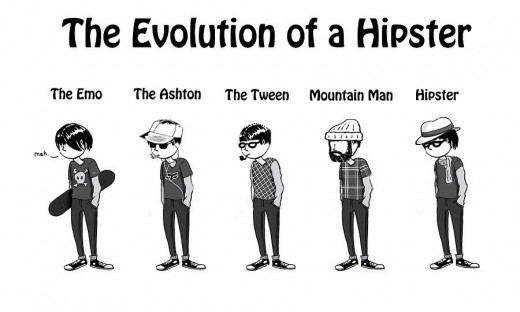
Image result for hipsters suck
<pubscout.com/thepubscout/wp-content/uploads/2013/02/hipster-evolution-brendan-mccartan.jpg>


<i.>
Every musician experiences misadventure. I'm no different. I've weathered my fair shaer of them after My First Band, which probably sounds like Your First Band. 

Take the issue of getting shows, Your First Band's lifeblood. Without them, it's tough to justify all that time spent polishing those nuggets into songs, let alone recording (God forbid), or assembling, a release that somebody might want to buy (God forbid, again). You wouldn't hire a plumber sight unseen, so why buy a record you've never heard, right?

However, unless you're well-connected, getting to play venues that don't treat you like dirt, and pay decently, is next to impossible. I'm as DIY as the next man, but surely, Your First Band benefits from treading a few well-established boards, right? Remember, whether you book the gigs, or someone else does, you face the same challenge: getting people to show up (God forbid, yet again).

Then why's it so hard to score decent shows? Because the venues that matter are often run by a clique that spends much of its time and energy clanking up the drawbridges of their real or imagined castles against those dreaded outsiders. Every local music scene suffers from this syndrome, to varying degrees. Some places are better than others; such is life.

I learned this lesson the hard way, when I tried booking My First Band at Club Snoot. Our guitarist suggested it, because their management worked in tandem with our hometown watering hole, Romanov's (an hour and 70-odd miles south).

"If you're in, you're in," my guitarist prompted. "Bands that play one of those clubs usually play at the other."


<ii.>
Thus encouraged, I dutifully phoned Club Snoot's booker, the bass player and frontman for a hot local prog-metal band. We'll call them Grey Matter Cartel. (Storyteller's Note: Names have been changed to avoid retribution from the guilty. It sucks, but it is what it is.) 

I ran down My First Band's sound and credentials, such as they were, after roughly a year of existence. We seemed to get on okay, until I mentioned our present lineup: my guitarist, and yours truly (bass, lead vocals). "We're between drummers right now," I explained, "so we're getting by with a drum machine. That's how we started, anyway, so it'll do, for now."

Grey Matter Cartel's mainman immediately took issue. In several exhaustive sentences, he claimed that Club Snoot's crowd weren't used to such fripperies, which they might take for self-indulgence on our part.

Hmm, I thought, doesn't bother the industrial music crowd! Ministry, Skinny Puppy, Sisters Of Mercy -- you name it, nary a drummer among 'em, and nobody's ever asked for their money back! Hell, even conventional bands have done it, including Echo & The Bunnymen,  (sparking a rumor that "Echo" referred to the machine, one the band hotly denied using).

I thought the objections were stupid. This being the late '90s, drummers had often become increasingly sidelined by all manner of mechano-beats, which those big hotshot producers found more expedient to use in their increasingly over-arranged, overly polished scheme of things. Time is money and all that, right?


<iii.>
But I never got to explain those subtleties, such as they were, to Grey Matter Cartel's guiding light. The catch in his throat rang loud and clear: get lost. You aren't what I expect. You're dead meat.

He hemmed and hawed a minute longer. Finally he decided: "I'll book you when you have a drummer. Let me know when you do."

Click! There you had it. We didn't have a live human keeping the beat. Ergo, we couldn't be part of rock's holy trinity, its nuclear family, of guitar, bass and drums. That was that.

Club Snoot has long since closed, like so many dysfunctional dens of iniquity. Grey Matter Cartel itself called it a day in 2001. By then, the fellow I'd spoken to had replaced the whole band, with himself as the sole remaining original. So much for tradition, I suppose.

Still, after scouring the Internet, I've found no evidence of him releasing music after the mid-2000s. Aside from a couple of Grey Matter Cartel reunion shows that happened four years ago, he seems to have disappeared from the scene that he once lorded over.

So, while My First Band didn't go on to massive acclaim, neither has this gent, apparently. I'm still working, mostly on my own, which feels way more satisfying than dealing with the egos and excesses of trying to break My First Band. Or Your First Band, for that matter.

Roy Orbison said it best, I believe, and mind you, I'm working from memory. But the quote goes something like this: "Time takes care of a lot of things." That's my solace, and I'll have to take it. --The Reckoner

Friday, April 28, 2017

Taylor Swift Sleeps In Satan's Pocket (So Satisfy Your Artistic Soul Anyway, OK?)

<http://www.teen.com/2013/07/09/news/taylor-swift-satan-sign-holder-arrested/>

<When the mimes are heading for the exits, they're trying to tell you something: Taylor Swift ponders her country-pop confections' impacts on a generation...and shudders>

<i.>
One of the more amusing conspiracy theories making the rounds is the notion that country-pop phenom Taylor Swift is a) a former Satanic cult leader, b) a clone of '90s-era Satanist Zeena LaVey (as in, daughter of the late Anton LaVey, Church of Satan founder), or c) involved in some other unspeakable fashion with "THE PLACE WHERE THE GUY WITH THE HORNS AND THE POINTED STICK CONDUCTS HIS BUSINESS" (to quote Frank Zappa's "warning label" for his 1985 album, Frank Zappa Meets The Mothers Of Prevention).

You know what? I think the theorists are onto something. 

Surely, there's something Satanic about the Orwellian pervasiveness that carpet-bombs Swift's country-pop confections so remorselessly down our throats, everywhere we go. Like so many hyper-commercial phenomenons, she's absurdly overexposed, a situation hardly mitigated by her habit of slapping cease and desist orders on anything that moves or breathes without her approval. And future pop archaeologists will have loads of fun deciphering all those in-joke-laden odes to her exes (that'll require reams of footnotes to enlighten the next generation, if -- and when -- they're due for a reissue.)

But that's not how Discmakers' sees it. From their standpoint, I'm doing it wrong, at least, when it comes to programming my YouTube channel. Instead of posting what excites me on some level, I need to buckle down, and start covering more current artists, like Swift. Charting any other course is simply "flawed and self-indulgent," as Discmakers columnist Johnny Dwinnell suggests:

"You put up videos of your original material, but no one in the marketplace is aware of you, so you get zero views from new possible fans; just views from friends and family.

"You make videos of you covering your favorite obscure songs, but again, the only views you get are from people who already know you because nobody is searching for the original version of the curiosity you decided to cover in the quest to satisfy your artist soul."


"I'm An Artist-Businessman..."

<ii.>
What's the answer? Don't worry, Dr. Dwinnell has the cure: "This is where the cathartic artistic satisfaction comes from, putting your stamp on another artist’s original song. The more distant the original artist’s style is from yours, the more compelling your version can be. Take artistic license and go as crazy as you want to." To be fair, he doesn't suggest focusing on Swiftl full-time, since "every girl and her mother are posting their version of the latest Taylor Swift single."

On its face, such logic is sound enough. Consider how the Clash so indelibly stamped their full throttle punk attack on Junior Marvin's seminal cry of protest, "Police & Thieves." Released in May 1976, the song traveled well beyond its Jamaican origins -- notably, to the Notting HIll Carnival, in London, where it became an anthem for residents who battled a heavy-handed police presence there on August 30, 1976.


Two of the participants, Clash members Joe Strummer and Paul Simonon, decided to record "Police & Thieves." (The experience also reportedly inspired the first major Clash anthem, "White Riot."). The
 main ingredients -- Strummer's passionate vocal performance, Mick Jones's deft arranging, and unrelenting rhythmic attack -- ensured a permanent slot for "Police & Thieves" in the Clash's setlists. To this day, "Police & Theives" ranks among the most successful -- and influential -- cross-genre experiments of all time. (Take the song off the US or UK versions of the band's debut album, The Clash, and see what happens to the running time.)

So, yes, re-interpreting a song you didn't write often ignites greater possibilities. No arguments there. The problem, though, with the constant admonishments and exhortations dished out by Dwinnell, and others like him, is that they're not necessarily offered in that spirit (do these things to burnish your identity a bit more). Really, it's touted in the service of filling shoeboxes with $100 bills, something most music makers never get to experience (unless they fall into the blling-bling-bling hip-hop camp, which is a totally separate discussion). 


"I Can't Even Find Where It Went."
<iii.>
The advice reminds me of a term attributed to Saturday Night Live's creator and producer, Lorne Michaels, who once referred to himself an "artist-businessman." However, as Doug Hill and Jeff Weingrad document in their excellent book, Saturday Night (1987), Michaels's business side won out moire often than not. Examples include the second season, when your favorite aliens and mine -- the Coneheads -- blasted off to their home planet of Remulak, apparently for good, only to return for the next season, no worse for wear.

Does that make Lorne Michaels a bad person? No. He's hardly the first creative personality to blink when the wish to take risks (Hey, here's my daring new direction) collides with the desire to keep earning the audience's vote of confidence. There's a reason why Graham Parker once sang: "I have seen the future of rock, and it sucks." But what makes these hyper-career-driven "music-preneur" sites irritating is the broad strokes that they use to paint the big picture. None seem to acknowledge that obscurity is the coin of the realm for genres like metal and punk -- where bands routinely one-up each other by digging up the latest undergorund nugget (like the Northern Irish punk band, At Gunpoint, on whom I stumbled via Dave Fanning's archive site).

This stuff matters. For all the gibing at "satisfying your artistic soul," you don't need to look far for disasters that occurred the minute an artist or band checked integrity at the door. For further reference,read When The Screaming Stopped: The Dark History Of The Bay City Rollers (2016). Then see how much you want to join the dream factory after reading quotes like this one, where the band's lawyer discusses what happened to the Rollers' merchandising money:

"'I can't even find where it went,' he said. 'It certainly didn't go to the band members. I'm not saying the merchandisers didn't pay, everybody paid and it went into the machinery operated by the accountants and professionals. He estimated that including record royalties, publishing incomes, merchandising and touring, the band had during their peak 'probably generated in excess of $1 billion in turnover and at least 25 percent of that was profit."


Locally, I've seen too many performers just going through the motions, slogging through their umpteenth rendition of "In The Midnight Hour" or "Brown-Eyed Girl" without a trace of emotion, feeling, or conviction. I don't care how much they pull in per night, or how much clapping their lead-footed version inspires....against all odds (and common sense). At best, they resemble the walking dead, minus the nifty zombie makeup effects, and painfully aware of it. At worst, they're not aware of what they're doing anymore, because, deep down, they've stopped giving a shit.

Enough of these so-called "artist-businessmen" already! Let us find an ice floe to perch them on, and send it drifting away, where they can't harass the decent folks who want to satisfy their soul (however they define that term artistically). As for me, I'll keep doing what I want, and leave the rest alone. I couldn't play a Taylor Swift song if it hit me on the head. However, if you want my take on that unreleased Clash song, or At Gunpowder -- guess what? You've come to the right place. --The Reckoner


<Coda: Merry President's Day, 2020>
As it turns out, maybe I've been a tad hard on La Femme Swift lately, especially after reading of her former label, Big Machine, essentially bought her recorded legacy to date out from underneath her, via Ithaca Ventures, a holding company that manages around $500 million, as of 2018. Ithaca includes SB Projects, a music management and marketing firm founded by Scooter Braun, who swooped down and scored the rights to six Swift albums, except her latest release, Lover (2019). Big Machine founder Scott Barchetta remains with the company as CEO and minority shareholder in Ithaca.

The resulting fallout -- which led to Big Machine denying the right to perform her older songs at the American Music Awards last year, and using any of them in her Netflix documentary, Miss Americana, among other developments -- has been extensively (some might suggest, exhaustively) chronicled elsewhere. But it's no less nor more striking than equally one-sided deals, like the Beatles' arrangement with Northern Songs, whose late owner, Dick James, also sold -- without warning -- to ATV in 1969, ensuring that the band and its creative brain trust, John Lennon and Paul McCartney, would never again own their own songs.

All roads eventually led to Michael Jackson, who swooped down and got the catalog in the 1980s. This development led to oddities like McCartney having to seek permission to re-record and perform songs he'd long been identified with publicly, like "Yesterday," for his ham-fisted movie musical, Give My Regards To Broad Street (1984). Swift has announced similar plans to rerecord her older albums.

The hustle goes on, without missing a beat, though you can't help but wonder what digit heads like Borchetta or Braun mean by blessing their business ventures with cute names like Big Machine. A case of self-revelation, or not so subtle hint of, "The joke's on you, buddy"? You decide.

At any rate, Satan was closer than we could have ever imagined, though suffice to say, we here at Ramen Noodle Nation believe that any artist should own as much of themselves as possible -- whether you're the Beatles, Taylor Swift, or anybody else. In an ideal world, that starts at 100 percent, and stays there. The old saying, "You don't get what you deserve, only what you negotiate," applies more than ever.

But one thing isn't changing. I'm still not learning any Taylor Swift songs, no matter how often she revisits them. Some red lines just aren't worth crossing. For any amount of money.


Links To Go (Hurry, Buckle Down
And Learn Those Current Releases)

BT.com: August 30., 1976:
Racial Tensions Run High
As Notting Hill Carnival Ends In Riots:
http://home.bt.com/news/world-news/august-30-1976-racial-tensions-run-high-as-notting-hill-carnival-ends-in-riots-11364000534127


Discmakers Blog: 
Developing Your YouTube Marketing Strategy:
http://blog.discmakers.com/2016/12/developing-your-youtube-marketing-strategy/?utm_campaign=EA1651&utm_source=DMAudio&utm_medium=Email&spMailingID=52982625&spUserID=MjcwNDQwMzIzS0&spJobID=1062667874&spReportId=MTA2MjY2Nzg3NAS2

Police &  Thieves:
Wikipedia Entry: 
https://en.wikipedia.org/wiki/Police_and_Thieves

The Guardian: Junior Murvin Has Died,
But The Story Of Police & Thieves Lives On:

https://www.theguardian.com/commentisfree/2013/dec/04/junior-murvin-died-police-and-thieves-jamaican-reggae

Sunday, November 13, 2016

Dog Eats Dogma (Disc Makers Style)


How do you do, I don't think we've met
My name's Ian, and we're Minor Threat
I count on music to be a good bet
Catch me counting after every set (yeah, yeah)
--Minor Threat ("Cashing In")

<i.>
The important moments of any conversation are the unsaid ones. That certainly applies to a chat I had with a fellow musician, back in the '90s, when the alternative rock gold rush was underway. We shared the same practice space in Grand Rapids, so it was impossible not to get caught up in the fever, especially after hearing -- via another band's drummer -- that Green Day had just signed to Warner Brothers! Just then, the energy in the room audibly perked ramped up. You could feel the excitement rippling through everyone: God, I hope that's me one day! Maybe there's something to this rock 'n' roll dream after all.

My friend felt differently. Things weren't going well with his band,  the first one he was trying to lead. One weekend, the guitarist insisted on going off to see the Grateful Dead -- now well into their ugly twilight era, with Jerry Garcia crumbling from heroin addiction before the eyes of all those adoring Deadheads. Apparently, the guitarist wanted to see what the phenomenon was all about -- an odd priority for someone playing in a punk-garage band, perhaps, but human nature is often hard to fathom.

However, this burning desire to experience the decaying Dead conflicted with a gig that didn't promise to pay much, but might definitely pay something. My friend  begged, cajoled, even threatened, but the guitarist held fast. Band be damned, gig be damned; he'd bought his ticket, and that was that. To his everlasting chagrin (and outright resentment), my friend scrapped the gig.


Bigger problems loomed with the drummer, who had problems controlling a tempo. 
Instead of paying attention to his "day job" -- as in, practicing regularly, so you don't get tired, and tempos don't waver all over the place -- Drummerguy preferred to spend much of his down time playing his preferred instruments (guitar and keyboards). While that policy maintained his status as the second main songwriter, it didn't help the band gel instrumentally as a unit.

So I popped the obvious question: "Well, if those guys are giving you so much grief, why not get rid of them, and find more compatible people? If you write and sing two-thirds of the songs, it's your band, plain and simple. Make it your band."

"I know," my friend agreed. "But if I did that, I'd go right back to square one: a frustrated bass player trying to convince total strangers to fall in line with his vision. You know how that one goes." I duly conceded his point.

Not long afterwards, though, the band fizzled out, amid a flurry of ultimatums from Dummerguy. His demands included a change of the band's name, plus additional air time for his songs (that took up a third of the set, as it was). According to my friend, this final crunch came a week after an unproductive demo session that failed to yield acceptable versions of two of Drummerguy's songs. Apparently, the guy who sang so effortlessly from behind the kit couldn't nail his vocals when the red light blinked on. 
Fed up and frustrated, my friend rejected the ultimatums out of hand. These days, he mainly works solo. After seeing what he went through, I understand why.

Forget honesty, forget creativity
The dumbest buy the mostest,
That's the name of the game
But record sales are slumping,
And no one will say why...
Could be it one they've put out one too many lousy records?
--Dead Kennedys ("MTV Get Off The Air")

<ii.>
That's not how Disc Makers sees it, however. Typically, I discard their articles after they roll out into my inbox, but this time, the headline -- "Your Musical Talent (Isn't Enough To Make It In The Music Business") -- caught my attention. So did the telltale lead-in: "Your brilliant musical talent (imagined or otherwise) is worthless unless you understand how to stand out in the crowded marketplace. So what does what it take? You have to hate to lose."

The first sentence is factually correct, on its face. Talent alone isn't enough: to succeed in any creative field. You definitely need timing -- think of the hair bands stranded by the grunge gold rush -- plus an attention-grabbing piece of work, and, frankly, a lot of luck. The trouble starts with the next statement ("You have to hate to lose"), which introduces the author's thesis: treat music like sports heroes treat their business. If that means throwing everybody overboard as you go, so be it.

The author goes on to reference a sports podcast (of all things) run by a guy who's written 25 books and interviewed over 2,500 major sports stars in his career. (Life's been good there, I guess.) One question always popped up in every interview, without fail: "If you could name one talent or characteristic that you believe separated you from everyone else you competed against, what would that habit or characteristic be?"


To the author, the answer is simple:
 "I found it interesting that most of the sports heroes Don spoke to didn't mention their physical or athletic gifts, at all. Instead, they articulated that they all had a fear of losing that surpassed their joy at winning. At some point in their lives, they all learned to HATE losing far more than they love winning..."  


Scratching your head at this point? I don't blame you. How many interviews have we all read with musicians who said they hated sports, kept getting into run-ins with the jocks at their high school, or picked up a guitar because the competitive angle didn't appeal to them? Tons and tons, I suspect. (There are exceptions, of course: Johnny Thunders, the late New York Dolls' guitarist, was equally adept at baseball, and good enough to get scouted for it, until he refused to cut his hair. But I digress.) 

The worst part of the article, however, comes under the final heading ("This Is Show Business, Not Show-Friendship"): "Surround yourself with the right people. This means your band. If everyone isn't on board, get rid of them. It can also include your significant other. If he or she is not adding to your success, they're detracting from it."  Ironically, the author proceeds to recount a problem with his drummer ("We went out into the parking lot and found him in his crappy-ass, rusted-out, shit-box of a pickup truck -- surrounded by a literal sea of empty beer cans").

Now, ponder that image for just a minute. Are you picturing a healthy, well-adjusted individual? Hardly! I'd say, somebody with a serious substance abuse problem that -- at the least -- needs referral to a clinic, even an intervention. But that's not how the author tackled the problem, as he proudly declares: "We did the show, he sucked, and then he was gone. No questions asked."  Remember, it's not about your ability or creativity. It's who you step on.  (For further reference, see my previous article on this subject, "The 10 Commandments Of Hipsterdom.")


I'm taking a walk on the yellow brick road
I only walk where the bricks are made of gold
My mind and body are the only things I've sold
I need a little money, 'cause I'm getting old, right?
Minor Threat ("Cashing In")

<iii.>
I'm not going to belabor the rest of this article, which you can read for yourself below. What's interesting is the mentality on display. It's one thing to giggle aloud at the lead-footed cluelessness that characterizes so many music industry missives; quite another, though, to see it spelled out so nakedly in print.

That being said, much of this advice reads like counsel for an '80s- or '90s-era music industry, before the Internet blew up the infrastructure. If you want a snapshot of the aftermath, check out the latest episode of "Payday" that I caught this week on VICE. The show followed four people working unconventional jobs in Reno, NV  -- including one Feeki, a self-styled "redneck rapper" who spends much of his time crafting gimmicky videos and tracks along those lines.

On one level, it's superficially impressive. As of February 2016, Feeki's Facebook page stood at 89,000 "likes," and counting, plus 2,000 Twitter followers, the Nevada Sagebrush reported. How's all that self-promotion impacted the box office? According to "Payday," Feeki's efforts have netted him $9,000, though he was about to spend $4,500 on props for his latest video -- and he's still working as a parking valet, one of many McJobs that pays minimum wage (or barely above it).

So goes life in today's musical technocracy, where fans can "like" and "share" and pat you virtually on the back forever -- but whether it inspires them to plunk down some money for your product, and escape the valet parking McJob for good, is an entirely different proposition. I felt likewise about another "Payday" subject, a young girl who focuses on producing webcam porn-- a time-intensive gig that pays just $400 per month. She's also working a McJob (naturally, she didn't say what kind) that pays the same. How her boyfriend copes, God only knows.


As these examples suggest, the reality of selling out is far more complicated and messy than the images commonly associated with it. As my friend discovered, playing with your buddies only goes so far if they don't share your sense of commitment. But I don't think the Discmakers oracle's advice would have helped him, either. As an out-of-towner, he wasn't plugged into the local music scene, so he'd have found replacements hard to come by, anyway.And that's before we drop the obvious statement here. The ease of recording and uploading original content means that barriers to entry have never been lower, even though the path to success -- as in, shedding the McJob forever -- has only gotten narrower. Most will never earn more than a part-time income, if that. 

Still, I doubt that Disc Makers' management cares one way or the other, since these types of articles are often cranked out by consultants, doing what they do best: selling a dream. It's the same mentality that fuels those never-ending audition lines for shows like "American Idol," or "The Voice," because every hopeful chants the same mantra under their breath: I can't miss. I won't fail, because I'm special. I'm the exception. Wait till you get a load of me! 

Now, if you still want in, after reading these articles, fair enough, because no power on Earth will dissuade you. Just keep one question in mind along the way, though: "What the hell's the point of selling out if you can't even reap the benefits?" --The Reckoner


<quickmeme.com>


Links To Go (There's No Place Like Home, So Where Am I?):
Discmakers.com: Your Musical Talent Isn't Enough
(To Make It In The Music Business):

http://blog.discmakers.com/2016/10/your-musical-talent-isnt-enough/

(Paste into browsesr: link's not working, for some reason)

Minor Threat: Cashing In:
https://www.youtube.com/watch?v=58ZjFVi0am0


Nevada Sagebrush: Reno's Redneck Rapper
Is Making Moves To Success
:
http://nevadasagebrush.com/blog/2016/02/09/renos-redneck-rapper-is-making-moves-to-success/

Sunday, July 3, 2016

YIKES! Creative Industrial Complex Craps Out Another Lame "List" Article


<The Book Of Lists (Original Edition, 1977)> 
(https://en.wikipedia.org/w/index.php?curid=7118743)

If you're a child of the '70s and '80s, you'll remember when tomes like The Book Of Lists, and its related spinoffs (People's Almanac, anyone?) took the publishing world by storm. Like so many millions of others, I spent countless hours devouring the quirky subject matter of these books. From favorite sex positions, to rogue nations and serial killers, you could get lost on any page -- and, of course, memorize nuggets to give you the sheen of being an expert at something, right?

All the original three volumes are long out of print, though there's bound to be a few floating around on eBay, I imagine. Today's digital era, of course, is a different beast. Fewer people, I suspect, would have the time (or stamina) to slog through the 521-page Book Of Lists, let alone its 529-page sequel, The Book Of Lists 2 (or the truly sprawling People's Alamanc 2, weighing in at 1,416 pages).

Nowadays, we've got something more insidious going on -- the "list" article, which sites like Cracked.com have polished to perfection. But the results are often hit and miss, especially if penned by a representative of the Creative Industrial Complex -- such as a best-selling author, big shot remixer, or cranky blogger for hire -- who often doesn't bother disguising the agenda they're grinding.

Case in point? Today's exhibit ("9 Things NOT To Do With Your Next Song Demo") comes via discmakers.com, the CD/DVD duplication and manufacturing company that now owns the online music store, CD Baby. The overall tone, as one of the commenters (see link below) notes, is "drama-king offensive," such as the first finger-wagging tip against overlong intros: "If every song had 45-second intros, that would be 187 minutes spent waiting for the damn songs to start! Think about it."

As that same commentor retorts: "If it’s that bad, please retire or do something else for a living." The same advice, presumably, applies to tip #4, about putting the artist's name that you're pitchig in the subject line: "
The subject line is how the receiver will find a song among so many emails. That’s called common sense." Glad to see that we've cleared up how that big, bad Internet works, eh?

The best part, however, is the total logic implosion that occurs when Tip #2 (don't submit a poorly produced track) collides with Tip #8 (don't overproduce your demo). So, which is it? Are two Dixie cups and a spool of thread sufficient, or should we consider tossing a kitchen sink or two (sonically speaking) into the rough mix?

As commenter Matt McCourt snorts below, "This whole thing reeks of an ADVERT for a book rather any real tips." He then cites some advice from an exec that seems closer to the mark ("kid....it is the song...if it is any good, a boom box recording with you and a guitar will show us that"). Of course, these types of articles are often written in the brain-scrambling "compliment sandwich" style that every hipster loves -- just add a "but" after every other clause, and you, too, can speak the language! (As in: "Hey, kid, I love the song, but....it's sounding a little dated. Can we get a more contempo feel in here?" You get the idea.)

All this bet hedging often plays out over multiple weeks. For example, I've seen many a self-publishing blog that runs a headline like this: "Stop Presses! Print Books Are Dinosaurs! Embrace Your Inner E-Book Warrior!" Come next week, though, you might see a totally opposing banner headline: "Five Reasons Not To Ditch Printed Books Yet."

In the end, I do what jurors probably do when they're confronted with the farce of dueling experts for hire (Defense Expert: "Mr. Jones's toilet training at gunpoint is the primary factor to understanding why he chopped up his entire family."/Prosecution Expert: "Not a single study establishes a correlation between abusive toilet training and mass murder"). With a shrug, I give up trying to figure out who's right, and go with my gut. Works well enough for me.

The main problem with all these insufferable "list" articles -- other than the logic leaps I've cited -- is that they encourage a lot of formulaic thinking, while devaluing the impact of real writing. I remember coming across Elmore Leonard's "10 Rules Of Good Writing" on a literary blog. His first one is: "Never open a book with the weather." To which one of the more perceptive commenters responded: "What about George Orwell's 1984, which starts: 'It was a bright cold day in April, and the clocks were striking thirteen"? I don't think anybody's asked for their money back yet on that one. 

One of my longtime mates put it best, when I told him about my plans to riff on this topic: "Here's the thing with those types of articles....they make it sound like you can mathematize, or rationalize, what's popular, and that's what they play on. But....at the end of the day....it's the public that decides what flies, or what doesn't." Or, in my case....my gut. Works well enough for me. --The Reckoner

Links To Go (Take With A Barrel Of Salt, Then):
Discmakers Blog:

The Huffington Post:

Sunday, March 6, 2016

The 10 Commandments Of Hipsterdom (How To Succeed In Your Friendly Neighborhood Subculture)

<http://www.korsgaardscommentary.com/2012/04/why-hipsters-suck.html>

Everybody loves a good subculture, whether it's angry female singer-songwriters, junk-slinging grunge muppets, stick-thin alternative troubadours, or vampire- and zombie-fueled pulp storytellers...phenomenons that feed on our need to believe that yes, anybody can get a foot in the door, if they only believe. Look, ma, I can do it, too: I can become just like them. Isn't that cool? Everybody's invited to the party.

But that's not how it really works....at least, if you're serious about some kind of creative art career. At some point, like it or not, you'll encounter that shadowy clique who really calls the shots in any art scene, any local subculture...the Art Mafia. The Cognoscenti. The Hipster Cartel. The In Crowd. The Oracle. They go by various names, but their purpose is always the same: co-opt and twist what they can't control absolutely, while sucking all the oxygen out of the so-called local scene for themselves, with the drawbridge always carefully raised up to keep the newcomers away. And, of course, perpetuating themselves forever.

(Perpetuity is a big thing for any Hipster, as I once learned -- the hard way -- when talking with a fellow open mike night denizen: "How often have you played here?" He replied, in that tone of demanding immediate, automatic deference: "Oh, I've been playing music in this area for decades..." How'd I react? Let's put it this way: I didn't feel the urge to curtsy.)

Given all these challenges (as well as the odds of actually succeeding), maybe you should cut to the chase and forget the whole career performance bit -- so you can become one of those shadowy Hipster decision-makers who destroys others with the simple whooshing of thumbs up, or thumbs down. If that's your interest, you've come to the right place! Now you can get a crash course in the fine art of HIpsterdom without leaving your home. Look at the fringe benefits: access to a fast crowd, getting seen in all the right places, intimidating others into accepting your natural-born greatness (and pick up the tab for it) without having to think (if ever) for a long time...what's not to like about that? So how do you get your hands on these goodies, then?


Here's what you need to do, based on my firsthand observations of how your friendly neighborhood subculture works:


1. Art and culture is a zero-sum game, so play it to win, at any cost. From day one, the moment you dedicate yourself to the Hipster Lifestyle, focus every effort on getting to the top, however your area defines it. Don't worry about how many people you shit on or step on, because getting there matters, more than creativity or ideas or vision or all that other crap that the groundlings keep jabbering about. You get the gig or acclaim that someone else doesn't; nothing else matters. That's justification enough. What's good enough for others is never good enough for you, so proceed accordingly.

2. People are commodities; women are accessories. Success in any subculture depends on cultivating relationships with the in-crowd. Choose all your friends on this basis: "What can they do for me? How can this person make me look good?" And no self-respecting hipster is complete without an equally gritty-looking woman stapled to his arm...as long as she realizes, she's not there as his equal. She's there to make him look good.

3. Master the art of creative shapeshifting. Read your reviews religiously, and tailor your art or music or writing around them. So Pitchfork finds your latest masterpiece isn't whiny or self-referential enough? Then crank up the Narcissism Quotient for your next album or EP. Study what's selling in your field, and if you see something that's worth milking, don't hesitate to jump on it. Imagine what the world could do with a hiphop-/Americana-flavored remix of "I Am The (Zombie Vampire) Walrus (Forever)," for instance. You get the idea.

4. Namedrop, namedrop, and namedrop some more. Becoming a successful Hipster means learning how to keep the riffraff out. This requires learning Hipsterspeak that only you and the Chosen People in your Narcissistic Tribe understand. One, you don't need the extra competition, and two, you'll periodically need to evoke a better-known person's name to elevate yourself. Not sure how to go about it?

Watch something like those nauseating Matt Pinfield cartoons on VH1 Classic, and notice how he weaves himself into the action -- such as when he and his latest interview subject, Bono (U2), bond over a bad case of Montezuma's Revenue together (I kid you not) -- without upstaging the star. They'll appreciate the free advertising you give them, and you'll catch a little of their reflected glow. Everybody wins.

5. Always stay clinically detached from the action. Parse your emotions. Don't admit to having any feelings, especially for others. That's a waste of your time. (For further reference, study Invasion Of The Bodysnatchers -- either the original or the remake will do fine.) Caring deeply about something isn't
 to your advantage...because somebody else might get the upper hand on you. You're an aloof, cool and nonchalant member of the Hipster Narcissist Cartel. Your job goes on 24 hours a day, so act the part.

6. Crank out the same thing, in slightly differently variations, but never deviate from your self-imposed formula. Examples of this phenomenon are legion: Shepherd Fairey's reheated '40s-style posters, Keith Haring's squiggly figure, Damien Hirst's jeweled skulls -- the key is to find something that clicks with people, and repeating it...again. And again. And again. And again. But don't change the blueprint too much. That only confuses people. You'll appreciate this logic when you stare from the verandah of the overpriced condo that all your hackwork bought, sipping your $7 latte, as you remind yourself: "Now this is the life."

7. Never tell the same story more than once. Why's that, you ask? First, consistency is the hobgoblin of small minds. That's your get-out clause: practice saying it over and over, until you start believing it yourself. As most smart politicians know, you're less likely to get caught in a lie if you always throw out a different narrative to cover it up. You're not joining a police lineup, so what's the point in keeping your story straight? Leave that to the plebes.

8. Follow the in-crowd's tastes zealously, even if you don't buy into them yourself. To master this skill, you may have to channel those childhood moments when Dear Old Mom or Dad forced you to eat your Cream-O'-Wheat. You may have the same reaction to craft beer or vegetarian fare, but you can't risk deviating from your newfound fake friends' acquired tastes...no matter how wacky or skewed they seem. Remember, make one misstep, and you'll not only lose face...you might get voted out of the tribe. Then it's back to the gas station, keeping the coffee pot warm for minimum wage. Who wants that fate? Not you.

9. Develop an older/younger brother/sister-style relationship with a handful of select non-Hipsters. This approach serves two purposes. First, you can come across as "a man (or woman) of the people" without ever really committing to those ideals. Second, if you get them to believe that image, you'll soon have an army of plebes advertising your work, without you ever spending a dime. Don't forget to keep stringing them along. You want them to keep on thinking they'll somehow find a way to join the club, even though that'll never happen.

10. Self-preservation is everything. Never tell anybody to their face what you think of them. Unpleasant as it sounds, you'll often have to trash somebody's work or reputation to stay in the zero-sum game. Think of it as the cost of doing business. Such work is best done from a distance, however, like posting an anonymous blog entry -- or spreading rumors via social media -- because a true Hipster always strives to keep his fingerprints off the murder weapon. The more you refine this technique, the less likely that someone will ever get the drop on you. As John Lennon once said: "But first you must learn how to smile as you kill/If you want to live like the folks on the hill."

And remember: everyone around you is expendable. Everyone. --The Reckoner


Social rules have no negation
Kiss ass, kiss ass
What else are you good for
You think you're "unique," you think you're alone
You never learned how to think on your own
Your only basis for existence
is to gain group acceptance
Kiss ass, kiss ass
Kiss ass to your peer group


Form your "opinions," repeat what is said
Make your own "choices," go where you're led
Think your own "thoughts," eat what you're fed
Strength in numbers, not in your head
Kiss ass, kiss ass
Kiss ass to your peer group
--No Trend, "Kiss Ass To Your Peer Group"

Friday, September 25, 2015

Notes From The Floorboards: Give This 'Zine A Look...


[courtesy of: www.chairmanralph.com]

One of my favorite passages in Glen Matlock's memoir, I Was A Teenage Sex Pistol, concerns his take on the punk movement...that, for all the sociopolitical readings that John Lydon's /Johnny Rotten's lyrics got..."As a lyricist, John was always more Dostoevsky than Tariq Ali. He was just generally right out there on a limb, sending up notes from beneath his own floorboards."

What a lovely description, isn't it: "notes from the floorboards." Well, any DIY endeavor serves that purpose, doesn't it....especially 'zines, which seem to be making something of a comeback lately (the paper kind, I mean). It's reminiscent of the recent comeback of vinyl, as well, which the mainstream media is passing off as a fanatical clique's fancy -- though I suspect that it's more directly connected with a hunger for tangible objects to hold in your hand again.

Anyway, our co-conspirator, Chairman Ralph -- whose writing shows up here from time to time -- recently wrote in, asking me to review his new 'zine, Desperate Times. He describes it as "a mixture of music and commentary," which seems clear enough when you've got articles like "New York Dolls Stories," and "The Red-Headed Stepchild Says Something: Hanging With My Kind In Northwest Indiana," jostling for space with "The Secret Life Of Hemliga Bosse" (whom I've never heard of, but that's nothing new -- the indie and punk fields are crammed with the bodies of many, many little one-off savants).

I told the good Chairman that I'll hold off on a review, for now, as it's only the first issue..."so let's see how you fly," I wrote in my response, "and we'll go from there. If you've got a couple more issues, then it may even look like a trend." To give you a better idea of what he's playing at, here's all the basic info you need:


http://chairmanralph.com/communiques/

And here's a link, from what I gather, to a soundclip from that first issue itself (it's "The Secret Life Of Hemliga Bosse"):

http://chairmanralph.com/featuredsongs/

Naturally, the Chairman wanted a review, but I told him this approach might get him in the frame a little bit faster...as Squawker and I have to spend so much effort focusing on day-to-day survival, we don't really have loads of time (or wherewithal) to become full-time reviewers...mind you, doing this blog takes a fair amount of energy, as well.

However, if that admonition encourages you to try, contact us, and we'll sort something out -- tell us what you're doing first, however, so we can see if it's up our street. If you read this blog regularly, you already have a fair idea of the drift, and what moves us -- so there you go, then.

All the preliminaries aside, though, it's great to see interest growing in DIY culture and products, whether it's chapbooks, music, 'zines, or what have you. I always think of it as weeds growing through the cracks in the sidewalk, no matter how hard anyone tries to stamp them out...or maybe it's just a case of notes from the floorboards. Time will tell. --The Reckoner

Tuesday, May 26, 2015

Property Ownership = Power: A Punk Rock Realty Lesson


<i>
Never forget: property ownership is power in America. The STORE CLOSING banner hanging outside my local Dollar General store provided yet another reminder of that particular lesson...if I needed one.

At first, I presumed this latest sour development had something to do with the continuing creeping yuppification of our town. 
After all, this Dollar General store sits across the street from a CVS pharmacy that's springing up as I write. That project that aroused quite a bit of local opposition, since it's situated in a largely residential neighborhood. But that's not the main reason, as a cashier -- soon to join the ranks of the unemployed -- assured me.

"Then what's going on?" I asked. "There's people coming through here almost every day, so I can't imagine that this store isn't profitable..."


"Oh, it is," the cashier responded. "We're always really busy. The landlord saw how much business we're getting, and decided that we could pay a little bit more." She paused for the punchline. "But the company doesn't want to pay it."

"So what happens now?" I asked.


"They might build another store here..." She finished ringing up my bottle of dishwashing liquid and pair of two-liter diet pops.  "This town can definitely support one."

"Good luck to you, then," I responded. "We'll just have to wait and see, I guess..."

"Yeah, I guess."


<ii.>
Another reminder comes from my current reading of 924 Gilman (see the last post). Tucked away in this sprawling 400-page tome is a Punk Planet article ("924 No More?": May/June 1999) that focuses on how gentrification has hurt the Bay Area punk scene. One of its sources is an October 1998 San Francisco Bay Area Guardian article ("The Economic Cleansing of San Francisco"), which quotes the average rent for a one-bedroom apartment as rising from $845 to $1,200, or 56 percent, over a four-year period.

Based on that statistic, a person earning $6 an hour paying the standard one-third for rent would have to work 143 hours a week to afford the median rent! I'd hate to imagine how that figure looks nowadays. The article further cites a tenants' union survey which shows that, among people who changed addresses in the past year, half left the city entirely.

Granted, these are 20-year-old statistics, but the point hasn't really changed, since the whole problem has grown exponentially worse. After all, rent is the reason why CBGB -- for all its cultural significance -- disappeared, once the disputes with its landlord (Bowery Residents' Committee), proved too toxic to overcome. (For an update, see the New York Times link below on promises of a revival...which will apparently focus on finding a building to buy: "We don't want to be a tenant. We don't want to be a victim of what happened before.")

These issues matter, for reasons that often escape people who don't pay attention, until it's too way late...take it away, Punk Planet: "The face of the region is culturally strip-mined. Rent control laws, once some of the strongest in the country, have been gutted. Artists, the poor, young activists and people of color are being displaced as the white-collar cyber-yuppies sweep in like a plague of locusts (emphasis mine)." And so it goes...wash, rinse, repeat.


Warning: 
You've Been Gentrified, OK? 
Now Pack Up Your Shit
And Leave.

<iii.>
I got another reminder of the "property ownership=power" equation several years ago, when a venue I'd played in the past several times shut down. Like many small businesses, things had gotten off to a fast start. The first couple bills I'd played, i counted roughly 40-50 people on a Friday or Saturday night.

The next couple of times, the audiences dropped off to around 30 people (including the performers and their friends). The last couple times, we had the proverbial "five people and a dog" to witness our efforts. It was painful, and you didn't need a detective to see the end coming. Sadder still, of course, was the loss of a sympathetic home for offbeat acts -- avante-garde, folk-punk, garage -- that would never get a foothold otherwise.

One of my strongest memories is the guy whose set consisted of Gameboy devices that he manipulated back and forth, to create truly otherworldly sounds...if you combined Joe Meek's EP, I Hear A New World, with video game noises run through a concrete mixer, this is what you'd get. Whether I dug all of it is beside the point...but it sure beats sitting through a generic cover band any day.

Once the venue closed, I casually inquired about the rent. I was curious how much money the owner had spent keeping his dream afloat. It's a small town, right? I figure. How much can it really cost?  Then came the sticker shock. "It's $850 per month," the agent told me. I practically dropped the phone receiver.


Still Here? 
OK...Start Working Your 
Five Part-Time Jobs 
To Pay Off The Landlord.

<iv.>
For those who think that gentrification is purely an urban phenomenon, get a reality check -- it's probably happening right around the corner...and may be way too late to confront by the time you finally notice it. We need to explore ways of controlling our destiny -- whether it's micro-lending, pooling the few resources we do have, or forming a punk rock realty company to pursue our best interests. None of these things will be easy or convenient, obviously.

However, unless we put our own skin in the game -- and get involved, somehow, at a basic economic level -- the hustle will accelerate at a faster clip, but nothing will change. I got another reminder of this concept when I interviewed a local music store owner, who's operated since the mid- or late '60s. These days, that's a lifetime in retail.

During our interview, he paused  to point out an antique shop across the street. He mentioned that the owner had been having a hard time, because her monthly nut is so crushing.

"How much are they asking her to pay?" I inquired.  "Last I heard, she's paying $2,500 per month." He paused to deliver the punchline.  "All I can say is, I'm glad that I bought this building...otherwise, I'd have been out of here a long time ago."  And so it goes -- wash, rinse, repeat. --The Reckoner

Links To Go (Click Before Your Rent Skyrockets!):